Hope is often discussed as a fixed point on the horizon, but for those of us navigating the complexities of a life-altering diagnosis, it is far more fluid. It is a moving target that evolves with every scan, phone call and season. What begins as a desperate plea for a negative biopsy eventually transforms into hope for effective treatment, the absence of pain, and ultimately, the quiet longing to witness life’s most precious milestones like seeing a child graduate or meeting a future grandchild. Hope is a choice and, in the end, it is deeply personal. It is whatever the patient decides their version of hope looks like in order to keep moving forward.
Hope is our final defense against suffering and the bridge that spans the gap between despair and endurance. In the myth of Pandora’s Box, written in the 8th century BCE, Pandora opens the box and all the world’s evils including illness and despair are released to plague humanity. However, hope remained at the very bottom of the box suggesting that it is the ultimate counterweight to human misery.
This myth connects the individual experience of a 21st-century patient to the collective history of humanity. Ancient civilizations used myths like this to categorize the chaos of life. By attributing disease and suffering to the contents of the box, humanity moved from a state of being victims of a chaotic universe to being active participants in their narrative. Even if suffering was inevitable, giving it a name and an origin story provided a sense of control.
The myth also marks a shift in the human psyche from asking “Why is this happening?” to “How do I endure it”? It implies that while suffering is an unavoidable part of the human condition, we’re not left defenseless. Hope is what makes the other burdens bearable. For a patient, this means hope isn’t the absence of evils (like a terminal diagnosis or grief), but the stabilizing force that remains once those evils have been unleashed.
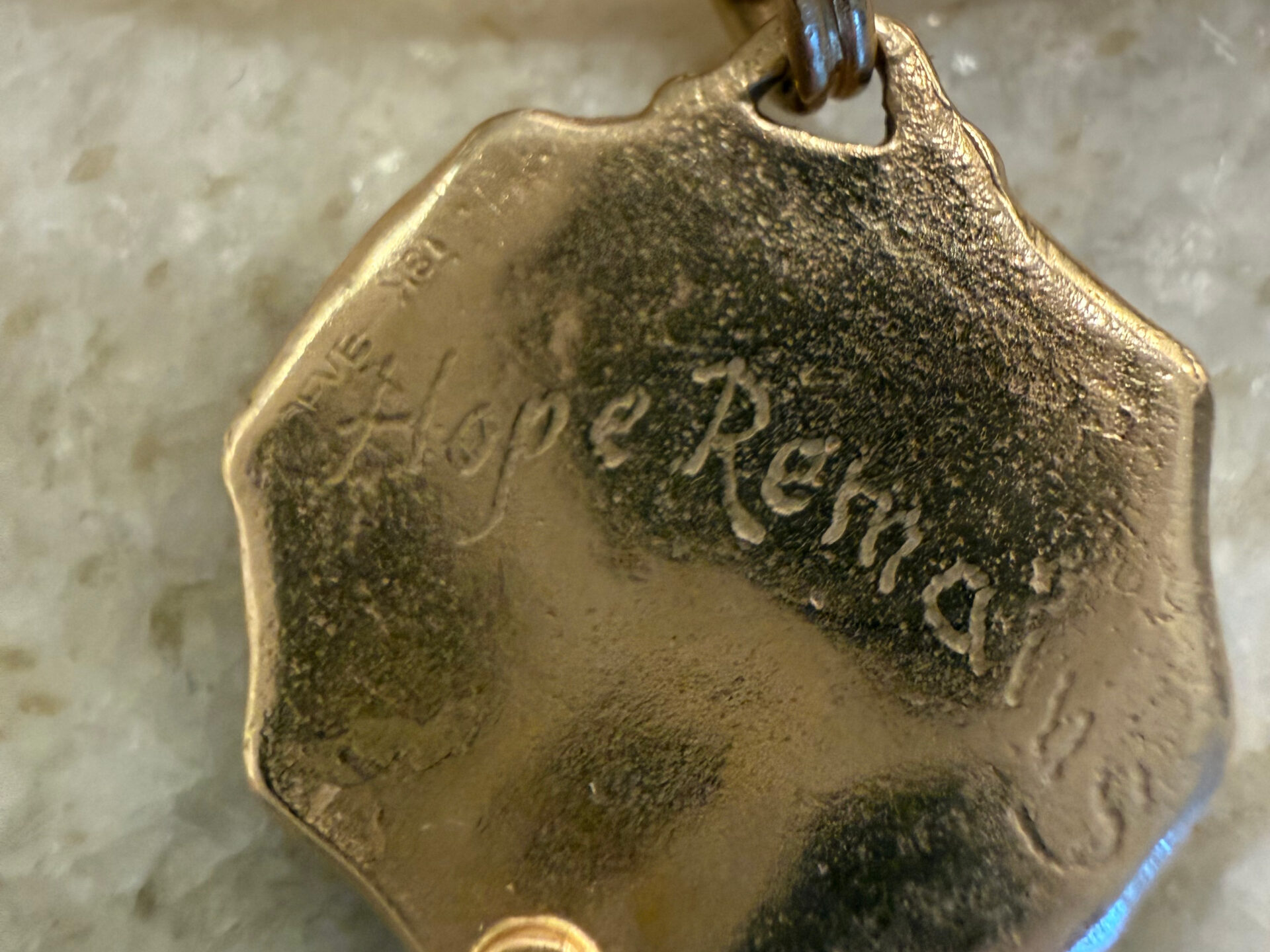
My mother-in-law, Candy, passed away over a decade ago from pancreatic cancer, she was only 68. Instead of daughter-in-law, she would call me her daughter-in-love. I loved her so much. When she got sick, seemingly out of nowhere, I was devastated. I did my best with my cancer biology and oncology consulting background to help her navigate her healthcare. In my opinion, I failed her (the topic for another blog). As her health was declining, her husband had described the myth of Pandora’s Box and found it comforting. We embraced this myth and everything it represented. After Candy died, I had pendants made for my family members that had her ashes integrated into the metal so she would always be with us. I had them inscribed with “Hope Remains”.